Table of Contents
Treatment can't make all of life's obstacles disappear, yet it can help you begin responding to difficult people or scenarios in healthier, a lot more effective means.
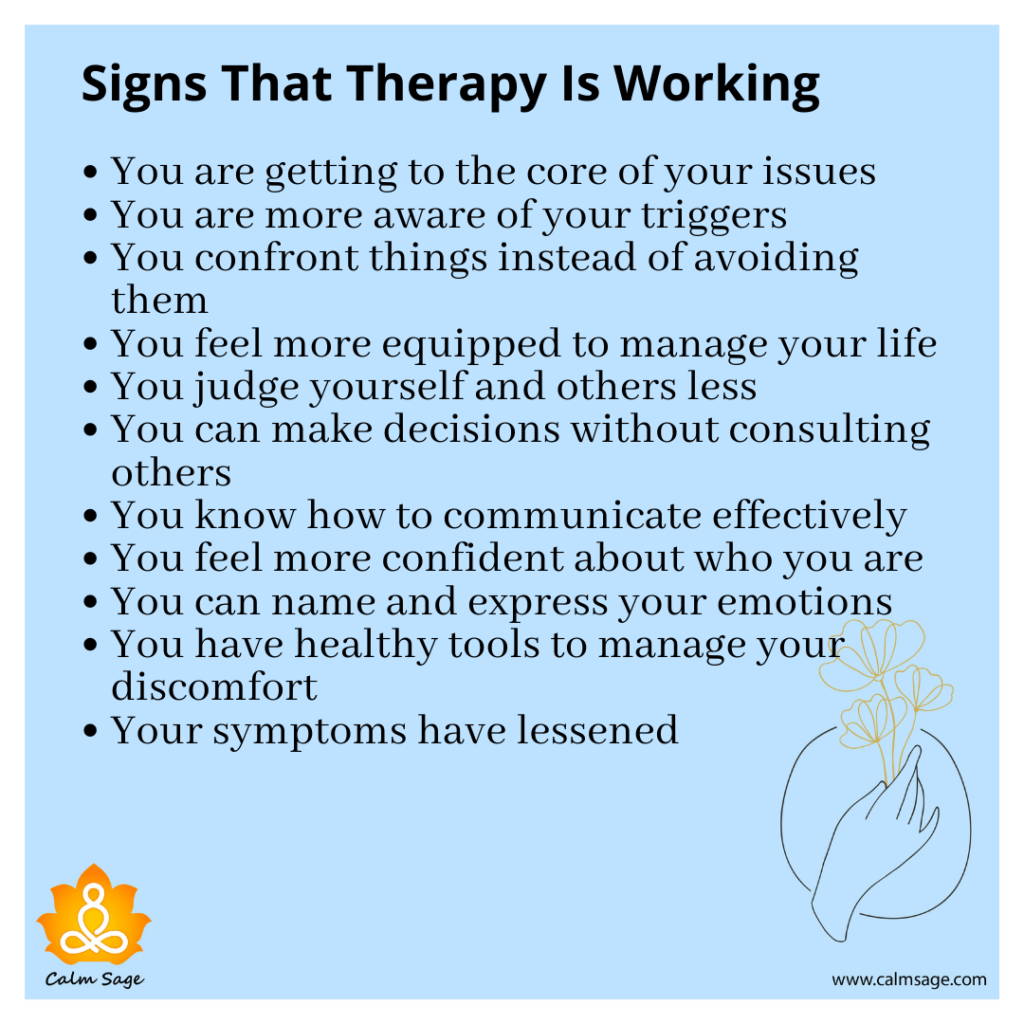
Development in treatment is always a favorable indication. It implies you're improving and progressing, and it reaffirms that you're being supported where you are now, not where you were when you started. Accomplishing your preliminary goals and establishing brand-new ones with your specialist demonstrates true energy in your healing trip.

Development in therapy is seldom, if ever, linear. This indicates points won't always take place in a straight line or in a foreseeable method. You could have troubles, regressions, or difficult minutes along the way, however it is essential to keep in mind that these are component of the procedure, not a sign of failure.
Are you thinking about treatment however are not sure exactly how frequently you should participate in sessions? Discovering the perfect balance in between treatment consultations can be a vital aspect in your psychological wellness journey. In this write-up, we will discover the inquiry: How often should you go to treatment sessions? There is no one-size-fits-all solution to this concern, as the depends upon numerous elements.
Moving Beyond from Harsh Self-Judgment
At Deepness Counseling, we provide lasting psychodynamic psychotherapy. Most medical professionals concur that going to represents the minimal level of immersion to see long-lasting impacts. The reason is simple: therapy is a technique. Simply like reflection, yoga exercise, exercise, composing, or any various other technique, it requires uniformity of immersion with a great deal of practice to discover and internalize the technique.
This will certainly encourage you to make selections that seem like your options (not just adjustments to the needs of other individuals). As you learn to determine and navigate the complexities of your internal globe via of treatment, you will certainly locate better credibility and imagination in job and in your relationships.
We motivate you to talk with among our specialists to establish the best regularity for you. It is also important to recognize that, in cases of financial challenge, a number of our therapists can and will accommodate a lesser regularity of treatment. Our company believe that it is important to meet you where you are and to relocate at the speed you figure out, as you begin on this profound trip.
Lots of people go to treatment once a week, and some might even go twice a week if they are taking care of severe distress or have extensive therapy goals. However, as they progress, these sessions might come to be much less frequent. For those with less pressing issues who only attend therapy for recurring upkeep, bi-weekly and monthly sessions are enough.
Developing Stable Shifts Through Mental Health Support
There isn't simply one variable determining the variety of times one ought to go to treatment, however many different aspects that play a duty in figuring out treatment regularity. These aspects can be interior (individual struggles, inspirations, etc) and external (restorative components). By understanding these variables, you will understand why your therapist creates a specific routine and why that routine is most matched to your recovery trip.
In such cases, twice-weekly sessions may be called for. Fulfilling the therapist more regularly in the onset of therapy is commonly advised. It might be on a weekly or twice monthly basis, and the factor for this is straightforward: the more you consult with the therapist, the sooner the healing bond can be developed.
Building Sustainable Evolution Through Mental Health Support
The regularity of treatment sessions additionally comes down to what therapies are being utilized. Different treatment techniques have different session regularity recommendations since some can be intensive while others may not be. Psychoanalysis usually needs multiple sessions a week, while psychodynamic treatment (what we supply at Depth Counseling) may require simply weekly sessions.
Your budget, work timetable, individual schedule, and the range between your home and the center need to all be discussed with your therapist. This is very important for setting a therapy routine that keeps you dedicated without including any kind of unnecessary stress. No matter the psychological health and wellness problem, attending once a week treatment sessions can be advantageous for all those that routinely go to therapy.
The Journey from Unattainable Goals to Self-Love
When therapy sessions are scheduled at an established interval, it allows you and the specialist to establish a stronger alliance, which, consequently, produces higher count on less time. This creates a risk-free room where you can process and discuss your experiences, thoughts, and sensations with your specialist to make sure that they can obtain understanding into your battles.

As you fulfill your specialist a lot more regularly, the likelihood of problems going unaddressed, nevertheless little, is low. With constant once a week follow-ups, the specialist can evaluate the development made and enhance coping devices and brand-new discoverings deemed essential for causing long lasting modifications. A therapistclient partnership is founded on trust, and without routine conferences, it can be difficult to construct that count on.
How to Open Your Treatment Pursuit
When you feel comprehended and unconditionally sustained, you can share your thoughts, sensations, and has a hard time flat-out. For intimate discussions to stream easily, it is essential to have a favorable atmosphere where personal expression is not suppressed by judgment. One method to produce such a safe space is to satisfy your specialist routinely to discuss your issues and discover resolutions during the time dedicated to you.
It is a vital component of psychological healthcare that can have a profound effect on an individual's overall wellness. Establishing will certainly be needed is a recurring procedure that might require adjustments in the process. It is vital to pay focus to signs that indicate the demand to boost or reduce the.
Discuss your interest in your therapist and explore the opportunity of even more intensive treatment. If you find on your own experiencing boosted distress, enhanced signs, or a worsening of your psychological health condition, it may suggest the need for more frequent treatment sessions. Connect these modifications to your specialist to ensure that they can readjust your therapy strategy appropriately.

Navigation
Latest Posts
The Process of Growth in Trauma-Focused Treatment
Unique Interventions for Specific Specific Reality
Compassionate Care for Dialectical Behavior Therapy: Why It Transforms Treatment